

Chronic Pain Needs Both Brain and Body Approaches
A common assumption is that pain comes directly from injury or damage in the body. The bottom-up view (body to brain) explains persistent pain as the result of ongoing noxious signals that heighten pain perception and progressively sensitise the nervous system, even after tissues have healed.
But pain isn’t simply about what’s happening in the tissues. The brain is always involved. A top-down perspective highlights changes within the brain’s own pain-modulating systems, along with a sensitised nervous system, which can drive pain independently of what the body is sending upward.
The issue with both approaches is that we are whole beings, and this isn’t a one-way street. Persistent pain is maintained by a continuous feedback loop between the brain and the body: the messages the brain is sending to the body, and what the body is feeding back to the brain. The brain interprets signals, sets the tone of vigilance, and can amplify or dampen pain. Meanwhile, the body generates the sensory, hormonal, and inflammatory cues that shape those brain responses.
This two-way loop is why the tidy split between “top-down” and “bottom-up” is useful for explanation but misleading when it comes to real clinical change. If you only work from one direction, you’re effectively trying to correct a loop by pushing on one side.
A purely top-down strategy involving pain education, cognitive approaches, meditation or brain retraining can help reframe threat, reduce fear and catastrophising, and change the brain’s predictive patterns. But if the body is still pumping out distress signals through dysregulated breathing, poor sleep, unstable blood sugar, or chronic inflammation, the system keeps getting dragged back into reactivity. The brain is trying to de-threaten the world while the body keeps yelling, “Something’s wrong.”
Likewise, a purely bottom-up approach using manual therapy, supplements, movement, somatic work, vagal stimulation, anti-inflammatory nutrition, can calm the body’s signals and create moments of relief. But if the brain’s circuitry has learned pain, shaped strong fear pathways, or is stuck in a high-alert predictive loop, those body-based improvements only go so far. The body says, “We’re safe now,” but the brain continues scanning for danger and amplifying sensations anyway.
This is the issue with single-direction therapy: it gets part of the picture right but leaves the other half untouched. Chronic pain and chronic stress are fundamentally network problems that involve changes in signalling, perception, prediction, inflammation, autonomic tone, and emotional processing. Shifting one piece helps, but it doesn’t fully unravel the pattern.
The most effective change happens when you work both directions at once: easing the body’s distress signals while teaching the brain new interpretive patterns. Safety felt in the body reinforces safety perceived by the brain. A calmer brain reshapes how the body responds. The two directions feed each other in a healthier loop, and that’s where people finally get traction.
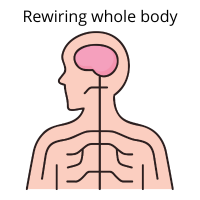
More than one direction
Safety in the body reinforces safety perceived by the brain. A calmer brain reshapes how the body responds.
This sets the stage for why integrated multidirectional therapies outperform one-way approaches every time. Therapies generally fall into “top-down” or “bottom-up” approaches, and understanding the difference helps you target the drivers of dysregulation.
Top-down therapies (brain-first)
These work by changing brain activity, perception, and interpretation of threat. The brain is the command centre for pain and stress, so shifting its patterns can noticeably change symptoms.
Top-down approaches include things like:
• pain education
• cognitive-based therapies
• mindfulness and meditation
• graded motor imagery
• brain retraining programs
• breathwork used to shift attention and calm cortical regions
These methods influence areas involved in perception, evaluation, and prediction: the prefrontal cortex, anterior cingulate, insula, amygdala. When these regions start interpreting signals as less threatening, the entire pain system quietens. It’s neural recalibration. They help dismantle the learned, habitual wiring that amplifies pain and keeps the nervous system stuck in hypervigilance.
Bottom-up therapies (body-first)
These target the sensory side of the equation. Instead of changing how the brain interprets signals, you change the signals themselves—what the body is sending up via the vagus nerve, spinal pathways, immune signalling, hormones, fascia, and muscle tension.
Bottom-up approaches include:
• manual therapies
• movement-based therapies
• somatic therapies
• trauma-informed bodywork
• sensory modulation (heat, cold, touch, vibration)
• nutrition, sleep support, anti-inflammatory strategies
• vagal stimulation, slow diaphragmatic breathing
• practices that regulate the autonomic nervous system
These approaches calm the system through physiological safety cues—slower breathing, softer muscle tone, reduced inflammatory mediators, steadier blood sugar, balanced gut-brain signalling. They change the body’s input, which changes the brain’s output.
How they work together
As outlined above, chronic pain and stress are rarely maintained by just one direction. Long-term dysregulation often rewires the system both ways: top-down (the brain expects and amplifies danger) and bottom-up (the body keeps sending distress signals). Real change happens when the two approaches are combined, changing the story in the brain while creating physiological safety in the body.
Bringing both approaches together gives you a system that relearns safety instead of threat, and that’s where lasting change starts.
Resources to start rewiring chronic pain
If are interested in booking for a consultation or have any questions please reach out via the contact page or let me know if you prefer a phone call and we can have a chat.